
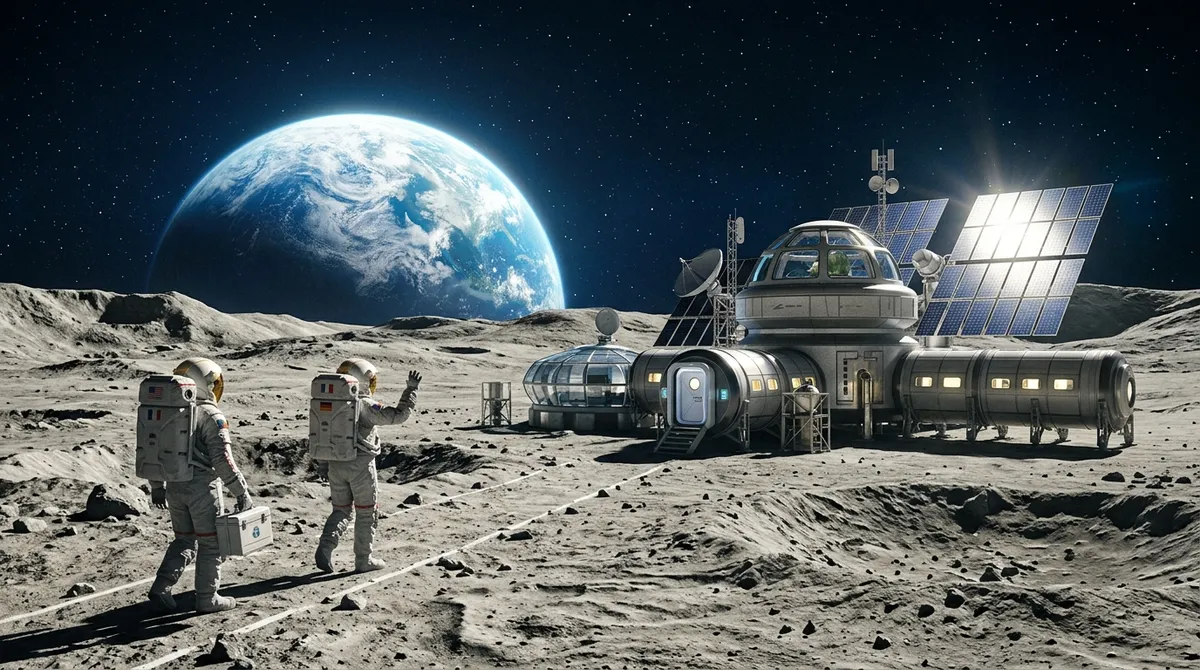
China's ambitious space exploration agenda is taking another significant leap forward with the recent unveiling of its plans to establish a manned lunar research station by 2030. This monumental project underscores China's commitment to becoming a dominant force in space exploration, showcasing technological prowess and fostering international collaboration.
China's Lunar Ambitions
The proposed lunar base aims to serve as a hub for scientific research, resource utilization, and international cooperation. China's National Space Administration (CNSA) has been meticulously crafting this plan, which is set to transform the landscape of space exploration. By focusing on sustainable presence on the moon, China intends to conduct wide-ranging experiments, from geological surveys to the testing of new technologies.
Technological Innovations
Central to this initiative is the development of cutting-edge technology. The CNSA has been investing in advanced spacecraft and rover designs capable of withstanding the harsh lunar environment. These innovations are critical for transporting equipment and personnel safely to and from the moon. Additionally, China is exploring sustainable energy solutions to power the lunar station, including solar panels and advanced energy storage systems.
International Collaboration
China's lunar project is not solely a national endeavor. The CNSA is actively seeking partnerships with other countries and international organizations. By fostering global collaborations, China aims to share resources, knowledge, and expertise, which will be pivotal in overcoming the myriad challenges of space colonization. This cooperative approach not only enhances technological exchange but also strengthens diplomatic ties between participating nations.
Scientific Objectives
The research station is designed to support a variety of scientific objectives. Key among these is the study of the moon's geology and mineral resources, which could provide insights into the early solar system. Furthermore, the station will facilitate experiments in biology, physics, and material science, leveraging the unique conditions of the lunar environment to advance scientific understanding.
Resource Utilization
One of the primary goals of the lunar station is to utilize the moon's resources, such as extracting water ice for life support and fuel production. By developing efficient methods for in-situ resource utilization, China aims to reduce the cost and complexity of maintaining a human presence on the moon. These efforts are not only critical for the lunar base but also for future missions to Mars and beyond.
The Road Ahead
As China progresses towards its 2030 goal, several key milestones will guide the journey. Upcoming unmanned missions will lay the groundwork for human habitation, testing technologies, and gathering crucial data. These missions will also serve as a proving ground for international collaboration, setting the stage for a shared human endeavor on the moon.
China's bold vision for a lunar research station exemplifies its growing influence in the realm of space exploration. By combining technological innovation with international cooperation, China is poised to make significant contributions to humanity's understanding of the universe and our place within it.