Jordan is increasingly positioning itself as a destination where history, nature, and responsible travel can exist together. From Petra and Wadi Rum to the Dead Sea, Jerash, Aqaba, and the country's nature reserves, visitors are being encouraged to explore with greater awareness. A key part of that shift is the role of Jordan's Public Security Directorate, which supports safe tourism while promoting environmental care, visitor guidance, and respect for local communities.
Jordan's Sustainable Tourism Vision
Sustainable tourism in Jordan is not only about protecting beautiful landscapes. It also involves safeguarding archaeological treasures, supporting rural communities, reducing pressure on fragile ecosystems, and ensuring travelers move through the country safely. The country's tourism appeal depends on a delicate balance. Ancient sites must be preserved. Desert environments must remain clean. Coastal areas need protection. Local residents should also benefit from visitor spending.
This approach matters because Jordan attracts travelers with very different interests. Some come for UNESCO-listed Petra. Others choose jeep tours and stargazing in Wadi Rum. Many visit the Dead Sea for wellness, while others dive in Aqaba or hike in the green valleys of Ajloun and Dana. Each journey leaves an impact, so better planning and stronger awareness are essential.
The Public Security Directorate's Role in Visitor Protection
The Public Security Directorate, often known as the PSD, plays a visible role in Jordan's tourism experience. Its work goes beyond traditional policing. Through specialized tourism services, public safety operations, and on-the-ground assistance, the PSD helps create a secure environment for domestic and international travelers.
Tourism police and security personnel are commonly present at major attractions, border areas, transport hubs, and busy visitor zones. Their responsibilities may include guiding tourists, responding to emergencies, managing crowds, supporting traffic flow, and helping prevent unsafe or harmful behavior. This kind of support gives travelers greater confidence when moving between cities, heritage landmarks, desert camps, and remote natural sites.
Safety is also linked to sustainability. When a destination is well managed, visitors are less likely to damage protected areas, enter restricted zones, or disrupt local life. Clear guidance can prevent accidents and reduce pressure on emergency services. It also helps Jordan maintain its reputation as a welcoming and reliable Middle Eastern travel destination.
How Security Supports Eco-Conscious Exploration
Eco-conscious travel depends on rules, education, and cooperation. In Jordan, authorities encourage travelers to respect natural and cultural spaces. The PSD contributes by helping enforce regulations, supporting awareness campaigns, and assisting with responsible movement through sensitive areas. This matters especially in locations where environmental damage can happen quickly.
In desert regions, for example, off-road driving can harm fragile ground surfaces and disturb wildlife. At archaeological sites, climbing on ancient structures or removing stones can cause lasting loss. Along beaches and marine zones, litter and careless recreation can damage coral ecosystems. Public safety teams, tourism officers, site managers, and environmental bodies all help reduce these risks.
Travelers benefit when expectations are clear. Good signage, visible staff, visitor information, and consistent monitoring encourage better behavior. They also remind tourists that sustainable travel is not complicated. It begins with simple choices, such as staying on marked paths, avoiding single-use plastic, using licensed guides, and leaving natural sites as they were found.
Petra: Protecting a World Heritage Icon
Petra remains Jordan's most internationally recognized attraction. Its carved facades, narrow siq, royal tombs, and desert mountain setting draw visitors from around the world. Yet Petra is also vulnerable. Heavy foot traffic, weathering, unauthorized climbing, and waste can challenge preservation efforts.
A responsible visit to Petra should include respect for marked routes and archaeological barriers. Visitors should avoid touching fragile stone surfaces when possible and follow instructions from site staff. Choosing local guides and purchasing services through official channels can also support the surrounding community in Wadi Musa.
Public safety presence at Petra helps manage crowds, direct travelers, and respond when assistance is needed. This improves the visitor experience while helping protect one of the world's most valuable heritage landscapes.
Wadi Rum and Low-Impact Desert Travel
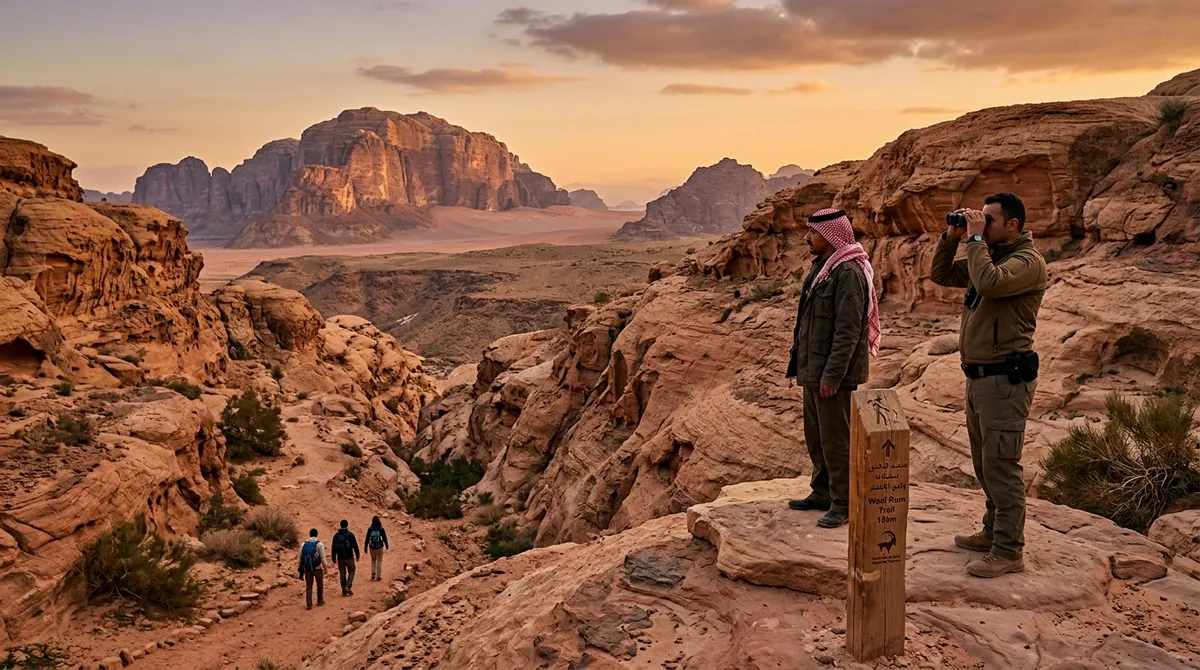
Wadi Rum offers a different kind of beauty. Its sandstone cliffs, red dunes, open skies, and Bedouin culture create one of Jordan's most memorable journeys. The desert also requires careful stewardship. Tire tracks, misplaced camps, noise, and litter can affect the landscape and the communities that depend on it.
Eco-conscious visitors should book responsible camps, use licensed local operators, and avoid activities that damage the terrain. Drinking water should be carried in reusable bottles when possible. Waste should be packed out or placed only in proper collection points. Travelers should also respect Bedouin hospitality, privacy, and cultural traditions.
Safety coordination is especially important in remote environments. Visitors may underestimate heat, distance, or limited mobile coverage. Guidance from trained operators and assistance from public authorities help reduce risk and keep desert tourism sustainable.
The Dead Sea, Aqaba, and Water-Based Tourism
Jordan's water landscapes add another layer to its tourism identity. The Dead Sea attracts spa travelers and wellness visitors, while Aqaba offers Red Sea diving, snorkeling, and beach holidays. Both areas require environmental awareness.
At the Dead Sea, travelers should use designated access points and avoid leaving mud, plastic, or personal waste behind. In Aqaba, coral reefs need special protection. Divers and snorkelers should avoid touching reefs, stepping on marine life, or feeding fish. Choosing certified dive centers helps visitors enjoy the underwater world safely and responsibly.
Coastal and water safety also remain important. Clear rules, emergency readiness, and visitor education can prevent accidents. They help protect both people and marine environments.
Nature Reserves and Community-Based Experiences
Jordan's nature reserves show another side of the country. Areas such as Dana Biosphere Reserve and Ajloun Forest Reserve connect travelers with hiking, wildlife, rural hospitality, and conservation-focused tourism. These places are ideal for visitors who want slower, more meaningful experiences.
Community-based tourism can help distribute income beyond major cities and famous landmarks. Local guesthouses, guided hikes, craft workshops, and traditional meals allow communities to benefit directly from tourism. In return, visitors gain a deeper understanding of Jordanian culture and landscape.
Responsible travelers should book with reputable local providers, follow trail guidance, and avoid disturbing plants or animals. Even small actions matter. Staying on paths, reducing waste, and respecting village customs all support long-term sustainability.
Practical Tips for Responsible Travel in Jordan
Travelers can make their Jordan itinerary more sustainable with a few practical choices. Use licensed guides and transport providers. Carry a reusable water bottle where refill options are available. Dress respectfully, especially in rural areas and religious sites. Avoid purchasing artifacts or natural souvenirs, including stones, shells, and corals.
It is also wise to plan journeys around weather and distance. Jordan's climate can be intense, especially in summer. Early starts, sun protection, and adequate hydration make travel safer. Visitors driving between attractions should follow local traffic rules and avoid unplanned routes through remote areas.
Supporting local businesses is another valuable step. Choose family-run restaurants, locally owned accommodations, handicrafts made by Jordanian artisans, and tours that employ community guides. This keeps tourism income closer to the people who host visitors.
Why Safe Tourism and Sustainable Tourism Belong Together
Jordan's approach shows that tourism security and environmental responsibility are connected. A safe destination can manage visitor movement more effectively. A well-managed destination can protect its heritage and natural assets. When travelers feel informed and supported, they are more likely to follow rules and explore respectfully.
The Public Security Directorate's involvement strengthens this connection. By supporting tourist safety, helping manage high-traffic areas, and encouraging responsible conduct, the PSD contributes to a travel environment that benefits visitors, residents, and the country's cultural and natural treasures.
Conclusion
Jordan offers far more than a checklist of famous sights. It is a country of living heritage, dramatic landscapes, generous communities, and fragile ecosystems. Exploring it responsibly means understanding that every journey has an impact. With support from the Public Security Directorate, tourism professionals, local communities, and aware travelers, Jordan can continue welcoming the world while protecting what makes it extraordinary.